Treasury 10-Year Yield Near Nine-Month High Before U.S. Payrolls Report
By -

Feb. 1 (Bloomberg) -- New York University Professor Nouriel Roubini, billionaire investor George Soros and Bain Capital Partners LP Managing Director Stephen Pagliuca talk about deficit risks in the global economy. This report also includes comment from Organization for Economic Cooperation and Development Secretary General Angel Gurria, Bank of Israel Governor Stanley Fischer, Bank for International Settlements General Manager Jaime Caruana and WPP Plc Chief Executive Officer Martin Sorrell. They spoke at last week's World Economic Forum meeting in Davos, Switzerland. (Source: Bloomberg)
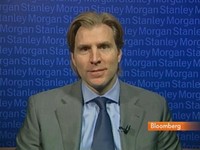
Feb. 1 (Bloomberg) -- Gregory Peters, global head of fixed-income research at Morgan Stanley, and Doug Cliggott, U.S. equity strategist with Credit Suisse, discuss inflation concerns, the outlook for interest rates and investment strategy. Peters and Cliggott talk with Tom Keene on Bloomberg Television's "Surveillance Midday." (Source: Bloomberg)
U.S. 10-year Treasury yields were close to the highest since May as investors sought higher returns in stocks and corporate bonds before a report that economists said will show U.S. job growth quickened in January.
The difference between the Federal Reserve’s target for its benchmark interest rate and 10-year yields widened to the most in eight months as investors demanded extra compensation on their longer-maturity holdings to guard against inflation. Pacific Investment Management Co., which runs the world’s biggest bond fund, said company debt is the better bet. Treasuries headed for their steepest weekly loss this year.
“There is no doubt the economic recovery in the U.S. is slowly getting some traction,” said Charles Diebel, head of market strategy at Lloyds TSB Bank Plc in London. “The problem is whether it will take a long time and a fairly aggressive pace of job creation to materially bring the unemployment rate down. That means long-dated bond yields are going to rise, while shorter-term rates remain anchored as the Fed keeps its tap open for longer.”
The 10-year note yielded 3.54 percent as of 11:03 a.m. in London after rising to as high as 3.57 percent, the most since May last year, according to BGCantor Market Data. The 2.625 percent security maturing in November 2020 traded at 92 15/32.
The MSCI Asia Pacific Index advanced 0.6 percent, heading for its sharpest weekly increase this year, eroding demand for the relative safety of government debt. The Stoxx Europe 600 index added 0.5 percent, set for the largest five-day gain since the week ending Nov. 5.
Ten-year yields will advance to 3.76 percent by year-end, according to a Bloomberg survey of financial companies with the most recent forecasts given the heaviest weightings.
‘Extended Period’
The spread between the Fed’s benchmark and 10-year rates increased to 3.31 percentage points. Policy makers reduced their target for overnight loans between banks to a range of zero to 0.25 percent in December 2008, and they repeated on Jan. 26 their pledge to keep the rate “exceptionally low” for an “extended period.”
The extra yield on an index of company bonds over Treasuries shrank to 2.32 percentage points as of yesterday, the narrowest in three years, according to Bank of America Merrill Lynch data.
“An improving economy means more cash flow to companies, and this improves their ability to repay their debts, reducing the risks associated with owning company bonds,” Anthony Crescenzi, a portfolio manager at Pimco in Newport Beach, California, wrote in an e-mail to clients yesterday. “A growing economy boosts risk taking, which reduces preferences for government securities to the benefit of spread products.”
Fed Treasury Purchases
The Fed is scheduled to buy $6 billion to $8 billion of notes due from August 2013 to January 2015 today as part of its plan to sustain the economic expansion.
Central bank Chairman Ben S. Bernanke said yesterday that the U.S. needs to see faster job growth for a sufficient time before policy makers can be assured the economic recovery has taken hold.
Fed Bank of Minneapolis President Narayana Kocherlakota said the U.S. economy faces “major headwinds,” in a speech yesterday in St. Paul, Minnesota.
Treasuries dropped yesterday, pushing 30-year yields to the highest level in nine months, as investors prepared for today’s employment figures.
Bonds slid as an industry report showed the fastest expansion since 2005 last month in service industries, which account for 90 percent of the U.S. economy.
‘Bearish Inclinations’
“There are bearish inclinations in the market,” said George Goncalves, Tokyo-based head of interest-rate strategy at Nomura Holdings Inc., one of 20 primary dealers that trade with the Fed.
U.S. payrolls increased by 146,000 last month, after a 103,000 gain in December, according to economists surveyed by Bloomberg before today’s Labor Department report. The jobless rate rose to 9.5 percent from 9.4 percent, the surveys show.
The difference between yields on 10-year notes and Treasury Inflation Protected Securities, a gauge of trader expectations for consumer prices over the life of the debt, narrowed one basis point to 2.32 percentage points. It reached 2.42 percentage points on Jan. 5, the most since May. The five-year average is 2.08 percentage points.
To contact the reporter on this story: Anchalee Worrachate in London at [email protected]
To contact the editor responsible for this story: Daniel Tilles at [email protected]
Sponsored Links
Advertisement
Advertisement
Advertisements
Sponsored Links
 Rate this Page