Dollar Falls to Lowest Since November on Bets Fed Will Maintain Stimulus
By -
Federal Reserve Chairman Ben S. Bernanke. Photographer: Andrew Harrer/Bloomberg
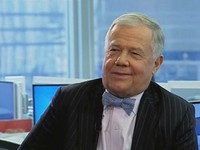
Feb. 28 (Bloomberg) -- Jim Rogers, chairman of Rogers Holdings, talks about his investment strategy for global stocks and commodities. Gold advanced, approaching a record, as tensions in the Middle East boosted oil prices, increasing demand for precious metals as a protector of wealth and hedge against inflation. Rogers also discusses his strategy for the U.S. dollar. He speaks in Hong Kong with Rishaad Salamat on Bloomberg Television's "On the Move Asia." (Source: Bloomberg)
The dollar fell to its lowest since November against the currencies of six U.S. trade partners on bets Federal Reserve Chairman Ben S. Bernanke will signal to Congress the central bank plans to maintain economic stimulus.
The euro rose against the dollar on speculation European Central Bank President Jean-Claude Trichet may indicate this week a readiness to increase borrowing costs. Sweden’s krona climbed to a 30-month high after Riksbank Governor Stefan Ingves said the central bank may boost interest rates at every meeting this year. Canada’s currency reached a three-year high versus the greenback.
“The FX market will want to see the juxtaposition between Bernanke and Trichet this week,” said Greg Anderson, a currency strategist at Citigroup Inc. in New York. “The Riksbank comments are pretty critical and if you think that’s reflective of what the ECB and Bank of England would say and do, you’ve got to be pricing in more hawkishness on that side of the Atlantic than this side.”
IntercontinentalExchange Inc.’s Dollar Index, which tracks the greenback against currencies including the euro and yen, decreased as much as 0.7 percent to 76.756, the lowest level since Nov. 9, before trading at 76.801 at 10:20 a.m. in New York, compared with 77.275 on Feb. 25. The gauge has fallen 1.2 percent in February.
The dollar remained lower versus most major peers even after the Institute for Supply Management-Chicago Inc.’s business barometer unexpectedly rose to 71.2 this month, the highest level since July 1988, from 68.8 in January.
Consumer Spending Falls
U.S. consumer spending rose less than forecast in January, accelerating 0.2 percent amid increasing fuel and food costs, data from the Commerce Department showed today. Another report showed European inflation stayed above the ECB’s 2 percent target for a second month in January.
The Swedish krona appreciated as much as 2 percent to 6.2934 versus the dollar, the strongest level since August 2008, on the outlook for higher interest rates. It traded at 6.2954.
There is “an increased probability that the repo rate will be raised at all of the monetary policy meetings held this year,” Ingves said in the minutes of the bank’s Feb. 14 meeting, published today. The Riksbank raised its benchmark repo rate this month for a fifth time since July, to 1.5 percent.
The krona appreciated 1.5 percent to 8.7093 per euro, from 8.8353 on Feb. 25. It has climbed 4.9 percent this year, according to Bloomberg Correlation-Weighted Currency Indexes, which track the currencies of 10 developed nations. The euro has risen 1.3 percent, while the dollar has lost 2.3 percent.
ECB Meeting
An ECB governing council member, Mario Draghi, said on Feb. 26 that inflation pressures are forcing policy makers to focus more closely on the timing of future interest-rate increases.
The ECB, which has kept its key interest rate at 1 percent since May 2009, will hold its next policy meeting on March 3.
The 17-nation euro gained 0.5 percent to $1.3827, extending its monthly advance to 1 percent, and rose 0.7 percent to 113.16 yen. It was up for the first time in three days against the Swiss franc, gaining 0.4 percent to 1.2824. Japan’s currency slid 0.2 percent to 81.85 per dollar.
Bernanke is scheduled to deliver the Fed’s semiannual report on monetary policy to the Senate Banking Committee tomorrow and is due to testify before the House Financial Services Committee on the following day.
Fed Policy Makers
The Federal Open Market Committee affirmed last month plans to continue its program of buying $600 billion of Treasuries through June even as policy makers increased their projections for U.S. growth this year. The Fed has kept its benchmark interest rate at zero to 0.25 percent since December 2008.
Oil prices at almost a 29-month high and concern political turmoil that cut Libya’s output will spread have curtailed demand for currencies related to economic growth.
“We’ve had a pause for breath after the events of the past few days,” said Jeremy Stretch, executive director of foreign- exchange strategy at Canadian Imperial Bank of Commerce in London. While political instability in the Middle East “hasn’t spiraled out of control,” there are “still enough headwinds out there to be wary,” he said.
Crude oil for April delivery rose as much 2.1 percent to $99.96 a barrel in New York before trading at $97.29. It rose last week to $103.41, the highest level since September 2008.
Canada’s dollar touched its strongest level against the dollar since Feb. 28, 2008, after a government report showed the nation’s economy grew at a 3.3 percent annual pace in the fourth quarter, more than economists forecast.
The currency was headed for a 2.8 percent rally this month before tomorrow’s meeting of the Bank of Canada, which has expressed concern that its strength may stall growth.
Canada’s dollar appreciated 0.4 percent to 97.40 cents per U.S. dollar, from 97.74 on Feb. 25. It touched 97.28 cents.
To contact the reporters on this story: Allison Bennett in New York at [email protected]; Lukanyo Mnyanda in Edinburgh at [email protected]
To contact the editor responsible for this story: Dave Liedtka at [email protected]
Sponsored Links
Advertisement
Advertisement
Advertisements
Sponsored Links
 Rate this Page