Treasuries Decline as Fed Purchases Less Debt Than Average, Stocks Rally
By -
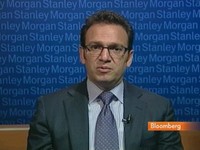
March 17 (Bloomberg) -- Jim Caron, head of global interest-rate strategy at Morgan Stanley, talks about the outlook for the U.S. Treasury market following the Japanese earthquake, ensuing tsunami and nuclear crisis. Caron speaks with Betty Liu and Michael McKee on Bloomberg Television's "In the Loop." (Source: Bloomberg)
Treasuries fell after the Federal Reserve bought less debt than average under its $600 billion program to use asset purchases to support the U.S. economic recovery and stocks rose.
Losses were briefly pared after the Portuguese parliament rejected the government’s deficit-cutting plan, raising the odds of a European Union bailout and renewing the refuge appeal of U.S. government debt.
“Even though a lot of global risk has resurfaced there was a pretty strong indication from the Fed’ buyback results that investors are aggressively looking to lessen their long positions, which spooked the market,” said Suvrat Prakash, an interest-rate strategist in New York at BNP Paribas SA, one of 20 primary dealers that trade directly with Fed. “The backdrop of the past few days has been one of easing concern from abroad and cautious optimism.”
The yield on the 10-year note rose 2 basis points, or 0.02 percentage point, to 3.35 percent at 5:35 p.m. in New York, according to Bloomberg Bond Trader prices. The price of the 3.625 percent note maturing in February 2021 dropped 6/32, or $1.88 per $1,000 face amount, to 102 9/32.
The central bank bought 24.6 percent of the $30.766 billion of securities due from May 2018 to February 2021 that was submitted by primary dealers, for a total of $7.56 billion. The Fed purchased 30.8 percent during a comparable operation on March 14. The average in the four previous operations for that range of maturities is 31.4 percent.
The purchases tempered an earlier advance in U.S. debt as Japan’s nuclear turmoil raised fears and NATO disagreement on an expanded role in Libya, and an unexpected drop in U.S. new home sales encouraged demand for the safety of government debt.
Portuguese Turmoil
Portuguese President Anibal Cavaco Silva will meet political parties represented in parliament on March 25 after Prime Minister Jose Socrates presented his resignation today after the rejection of the spending plan.
“Any rejection of austerity measures or any debt reduction will be negatively received, which should put a floor under any Treasury sell-off,” said Christian Cooper, head of U.S. dollar derivatives trading in New York at primary dealer Jefferies & Co. “The vote was a surprise given the environment right now.”
Yields on Portugal’s and Ireland’s debt rose to record highs on concern euro-area leaders are struggling to find a comprehensive solution to the region’s debt crisis.
In earthquake-ravaged Japan, authorities said people in Tokyo should avoid giving tap water to infants as workers tried to reconnect power to a nuclear reactor.
‘Headline Risk’
The 28-member North Atlantic Treaty Organization struggled to find a way to balance military needs and political sensitivities in the five-day-old operation in Libya. France is resisting overall NATO command to encourage more involvement by Arab countries.
“You have to respect the headline risk still out there with all of the uncertainty coming from Asia, the Middle East and Europe,” said Paul Horrmann, a broker in New York at Tradition Asiel Securities Inc., an interdealer broker.
The Commerce Department said purchases of new homes fell 16.9 percent in February after slumping 9.6 percent in the previous month. The median forecast of 77 economists in a Bloomberg News survey was for an increase of 2.1 percent.
The U.S. economy grew at a 3 percent annual rate in the fourth quarter, according to the median forecast of 81 economists in a Bloomberg News survey before the Commerce Department’s report on March 25. Last month the government reported a 2.8 percent pace of expansion.
Intervention Demand
The Group of Seven’s intervention to stem the surge in the yen after Japan’s earthquake may boost foreign purchases of Treasury notes at next week’s auctions and depress yields, according to Bank of America Merrill Lynch.
Foreign purchases at U.S. debt sales may increase as they did in September 2010, when the Bank of Japan last intervened in its currency, Bank of America strategists Priya Misra and Shyam Rajan wrote in a research report today.
“There should be a pickup in foreign participation in the front-end auctions at least,” Rajan, based in New York, said in a telephone interview.
The U.S. will sell $35 billion of two-year notes on March 28, the same amount of five-year notes the following day and $29 billion of seven-year notes on March 30, according to Wrightson ICAP, a Jersey City, New Jersey-based research unit of ICAP Plc, the world’s largest inter-dealer broker.
The Treasury will announce the amounts tomorrow, when it plans to sell $11 billion in 10-year Treasury Inflation Protected Securities.
Fisher Comments
Following last week’s Fed policy meeting, the central bank reaffirmed its plan to buy Treasuries through June to keep borrowing costs low while saying “conditions in the labor market appear to be improving gradually” and higher energy prices will have a temporary effect.
Dallas Fed President Richard W. Fisher said today in a speech in Berlin that he sees “extraordinary speculative activity” in the U.S. after the central bank pumped record amounts of stimulus into the economy.
Fisher, who votes on monetary policy this year, reiterated his view that no further stimulus will be needed after the Fed finishes its planned debt purchases.
To contact the reporters on this story: Cordell Eddings in New York at [email protected]; Susanne Walker in New York at [email protected]
To contact the editor responsible for this story: Dave Liedtka at [email protected]
Sponsored Links
Advertisement
Advertisement
Advertisements
Sponsored Links
 Rate this Page